Get your Lawn Ready for Spring with Core Aeration
A healthy, vibrant lawn is a source of pride for many homeowners, but achieving and maintaining that lush green look requires consistent care and attention. One often overlooked but essential aspect of lawn maintenance is aeration. In this article, we will explore the importance of aerating your lawn using a core aerator, the benefits it provides, and how it contributes to a thriving, beautiful landscape.
What is Lawn Aeration?
Lawn aeration is the process of creating small holes in the soil to allow air, water, and nutrients to penetrate the grass roots. This helps the roots grow deeply and produce a stronger, more vigorous lawn. There are several methods for aerating a lawn, but using a core aerator is considered the most effective approach.
Understanding Core Aeration
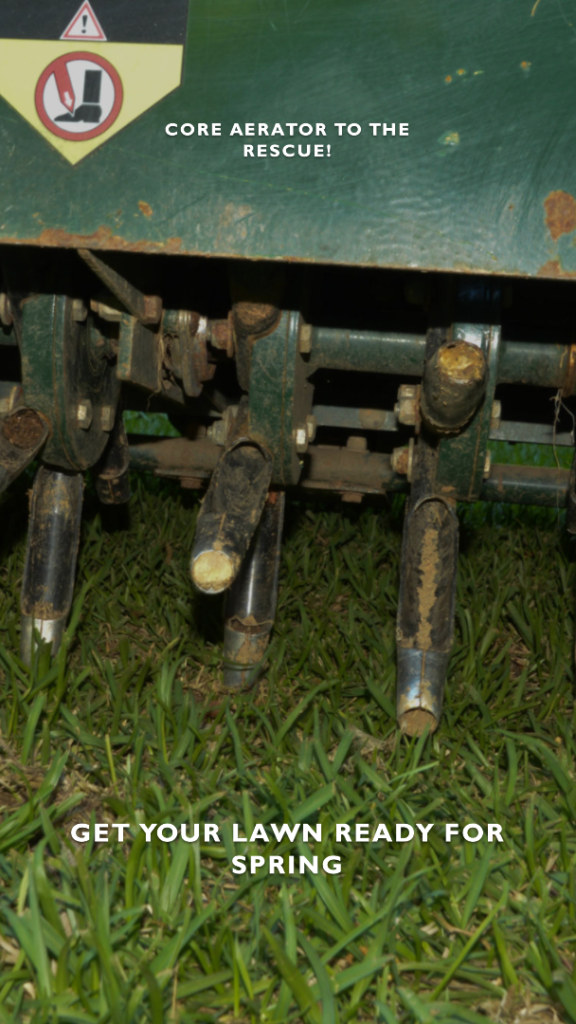
Core aeration involves removing small plugs or “cores” of soil and thatch (the layer of living and dead organic matter between the soil surface and the grass blades) from the lawn. This is typically done using a specialized machine called a core aerator, which has hollow tines or spoons mounted on a drum or disc. As the machine moves across the lawn, the tines penetrate the soil and extract small cores, which are then deposited on the surface. Over time, these cores break down and return nutrients to the soil.
Why Core Aeration is Necessary
Compaction Relief: Over time, the soil in your lawn becomes compacted due to foot traffic, mowing, and even natural settling processes. Compacted soil reduces the space available for air, water, and nutrients to reach the grass roots. Core aeration alleviates compaction, allowing your lawn to breathe and absorb the essential elements it needs to thrive.
Thatch Reduction: A moderate layer of thatch can be beneficial for your lawn, providing insulation and helping to retain moisture. However, excessive thatch can create a barrier, preventing water, air, and nutrients from reaching the grass roots. Core aeration helps break up and manage thatch, maintaining a healthy balance in your lawn.
Enhanced Root Growth: By creating channels for air, water, and nutrients to penetrate the soil, core aeration promotes deeper and more extensive root growth. A robust root system is critical for a healthy, drought-resistant lawn.
Improved Water Infiltration: Aeration improves the soil’s ability to absorb water, reducing runoff and increasing the efficiency of your irrigation system. This not only conserves water but also ensures that your lawn receives the moisture it needs to stay green and lush.
Fertilizer Efficiency: A well-aerated lawn allows fertilizers to penetrate the soil more effectively and reach the grass roots. This increases the efficiency of your fertilization efforts, resulting in a more vibrant and resilient lawn.
Enhanced Pest and Disease Resistance: A healthy lawn with a robust root system and proper nutrient uptake is better equipped to resist pests and diseases. Aeration can help create an environment that is less hospitable to pests and less susceptible to diseases.
When to Aerate Your Lawn
The best time to aerate your lawn depends on the type of grass you have. Cool-season grasses, such as Kentucky bluegrass, fescue, and ryegrass, should be aerated in the early spring or fall when the grass is actively growing. Warm-season grasses, like Bermuda, Zoysia, and St. Augustine, should be aerated in late spring to early summer, as they enter their peak growth period.
Frequency of Aeration
The frequency with which you should aerate your lawn depends on the specific needs of your landscape. Lawns with heavy clay soil or those that experience heavy foot traffic may require annual aeration, while lawns with sandy soil or minimal foot traffic may only need aeration every two to three years. It’s essential to assess your lawn’s condition and adjust your aeration schedule accordingly.
How to Aerate Your Lawn Using a Core Aerator
Prepare Your Lawn: Before aerating, mow your lawn to a slightly lower height than usual. This will make it easier for the core aerator to penetrate the soil. Also, water your lawn one or two days before aeration to ensure the soil is moist but not overly saturated.
Rent or Purchase a Core Aerator: Core aerators can be rented from local garden centers or equipment rental shops. If you plan to aerate regularly, you may consider purchasing a core aerator for long-term use. Smaller, manual core aerators are available for homeowners with smaller lawns.
Mark Obstacles: Identify and mark any obstacles in your lawn, such as sprinkler heads, utility lines, or shallow-rooted trees, to avoid damaging them during the aeration process.
Aerate Your Lawn: Begin aerating your lawn by making straight, parallel passes with the core aerator. After completing the first set of passes, make a second set perpendicular to the first. This will ensure that you achieve even and thorough aeration.
Apply Fertilizer, Seed, or Topdressing: After aeration, it’s an ideal time to apply fertilizer, overseed your lawn, or add a topdressing of compost or other organic material. The newly created channels will allow these applications to penetrate the soil and reach the grass roots more effectively.
Allow Cores to Decompose: Leave the extracted cores on the surface of your lawn. They will break down over time, returning valuable nutrients to the soil.
Resume Regular Lawn Maintenance: After aerating, you can resume your regular lawn maintenance routine, including mowing and watering. Be sure to keep an eye on your lawn’s progress and adjust your care regimen as needed to maintain its health and vitality.
Conclusion
Aerating your lawn with a core aerator is a crucial step in maintaining a healthy, beautiful landscape. By alleviating soil compaction, managing thatch, and promoting robust root growth, aeration creates an environment that allows your lawn to thrive. By understanding the importance of core aeration and incorporating it into your lawn care routine, you can enjoy a lush, vibrant lawn that is the envy of your neighbors.
Share this post: on Twitter on Facebook