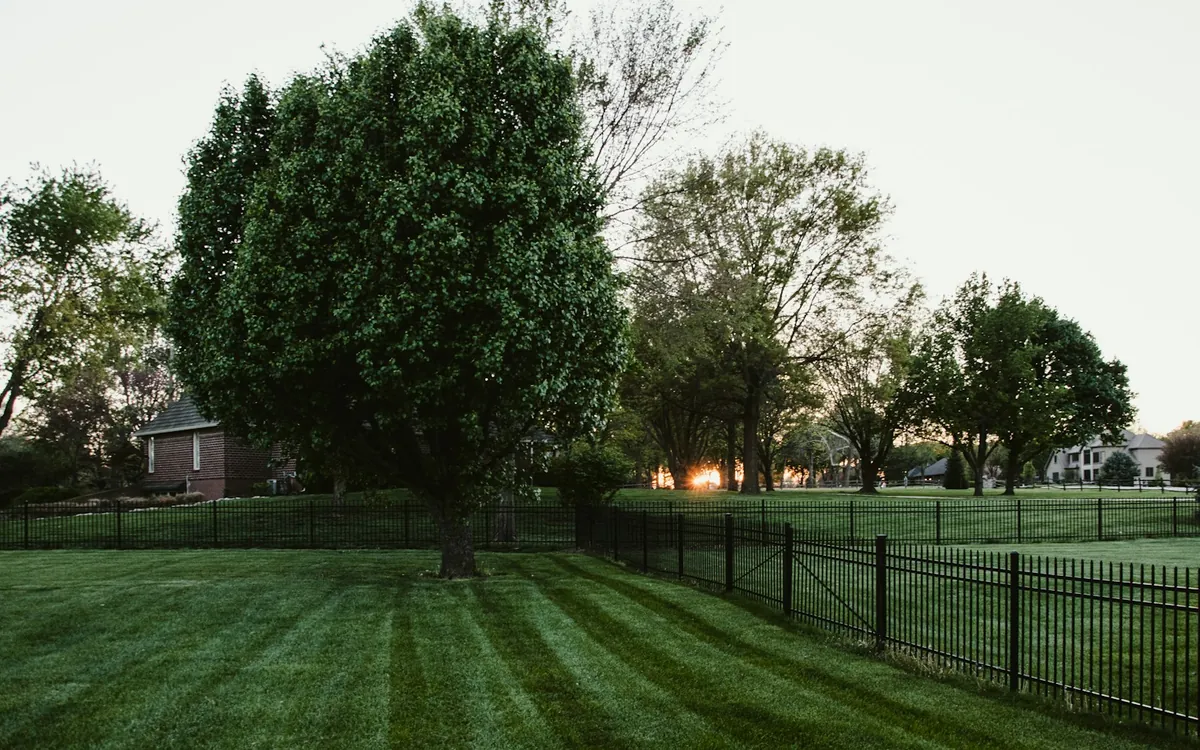
A lawn shared with a dog has to work as a living space. The most useful improvement may be a better route to the gate or a designated toilet area, rather than a more demanding grass routine.
Read the pattern
Colorado State explains that concentrated nitrogen compounds and salts in urine can damage turf; changing urine pH is not the solution. Small spots and a repeatedly worn fence line need different responses. Draw both on a simple yard plan before repairing them.
Build a routine around use
When practical, promptly water a urine spot to dilute it. Offer a designated non-turf toilet area and a clear, comfortable route across the yard. Avoid experimenting with dietary supplements to protect grass; discuss changes to a dog’s diet with a veterinarian. Keep the lawn plan focused on the yard.
Repair a patch you can protect
Match repair material to your grass and season. Protect a small repair from play while it establishes, then reopen it gradually. If the same gate corner fails again, consider a durable path there. For any lawn treatment, follow its current label for pet access; an “organic” description does not establish when pets can return.
Map the damage and protect one repair
Keep a simple yard sketch with spots, running routes, gates and resting places. A pattern can suggest what to inspect; it does not prove the cause of every brown area.
Download the printable worksheet One page · PDF · print or fill in a compatible PDF app
| Pattern | Check first | Practical next step |
|---|---|---|
| Repeated small spots | Compare with observed toilet locations and the timing of damage. | Plan prompt, appropriate dilution and a designated toilet area. |
| A bare fence or gate route | Watch repeated running, turns and stopping points. | Create an alternative route before repairing turf. |
| A patch unrelated to dog use | Check irrigation, recent care and whether the boundary is expanding. | Investigate ordinary lawn problems as well. |
- Choose one repair
Measure the actual damaged area and identify the grass. Keep a photo of the seed or sod label so the repair material is traceable.
- Protect establishment
Provide an alternative usable space and supervise access. A visual garden barrier is not a reliable dog enclosure; select a safe boundary for the animal and site.
- Reopen by condition
Check rooting, density and the ability to tolerate use. Follow any treatment’s current label for pet access and keep other household members informed.
Do not add supplements, salt or home remedies to a pet’s diet to protect grass. Discuss diet or urinary-health concerns with a veterinarian. A “natural” lawn-product label does not establish a universal safe return time for pets.
Your field record
Copy these headings into a notebook or a note on your phone, then keep the before-and-after observations together.
- Date and damage location
- Observed toilet spots and running routes
- Grass, repair area and material label
- Treatment label and access instructions
- Protection plan and recovery photos
Common questions
Can I promise the yard is pet-safe once a product dries?
Use the exact label’s instructions; some products specify additional steps or intervals. Keep the product name and label available so every person caring for the dog follows the same rule.
Should I treat every brown spot as urine damage?
No. Compare the location with observed use, but also inspect water delivery, leaves and recent lawn work. Persistent or expanding damage warrants a broader diagnosis.
Separate the route from the repair area
Draw the repeated travel route and mark the patch needing repair. Record wear and moisture before attributing damage to one cause. A protected repair cannot establish while it remains the main route through the yard.
Arrange a temporary route that suits your dog and household; measure the repair area separately. Keep animals off treated areas for the interval on the current product label. Product descriptions such as “natural” do not determine re-entry instructions.
Compare the diagnosis clues, then choose grass-specific repair material. Use the existing printable worksheet to record which changes reduced recurring damage.
Avoid the urine-pH and lawn-supplement myths
Colorado State explains dog-urine injury as a concentrated deposit of nitrogen-containing compounds and salts, rather than a simple lawn-pH problem. It cautions against using baking soda, gypsum or pet dietary additives as lawn cures. Discuss any change to a pet’s diet with its veterinarian; a lawn guide should not prescribe it. Colorado State Extension: Dog urine damage—causes, cures and prevention.
Separate wear from a suspected urine spot
Draw a gate-to-door traffic route and mark isolated spots separately. Record where the dog actually urinates, whether roots remain intact and how wet the soil is. A circular brown patch alone is not a diagnosis. For confirmed urine exposure, reduce repeated deposits at the same turf location; choose any designated surface for the particular pet and supervise access.
Compare symptoms before treating the patch. Use a repair material compatible with the surrounding grass and protect establishment from repeated wear.
Read the repair material, not just the dog-patch label
A package marketed for dog spots may contain a grass unlike the surrounding lawn. CSU’s repair advice distinguishes compatible turf types; its Colorado context is not a national ranking of the best grass for dogs. CSU Extension: Dog urine damage and compatible repairs, reviewed June 2025.
| Existing turf | Check the actual material | Avoid a mismatch |
|---|---|---|
| Fine fescue | Match the fine-fescue species or mixture. | Tall fescue or perennial ryegrass can leave different texture, color and growth. |
| Turf-type tall fescue | Read the species and cultivar analysis. | Coarse K31 tall fescue and annual/Italian ryegrass are not interchangeable patch material. |
| Bermudagrass or zoysia | Confirm compatible sod or vegetative material locally. | Quick cool-season seed does not reproduce the existing warm-season cultivar. |
Photograph the tag and compare it with the original planting record. For bluegrass mixtures or uncertain turf, ask for local repair advice before introducing a different component. Protect the repair from repeated deposits and wear; seed choice alone cannot remove either cause. Keep the repair record.
Gypsum, baking soda and lawn supplements are not a universal cure for dog spots.