Oklahoma · Buffalograss

Buffalograss
in Oklahoma.

Mowing, water and seasonal decisions for the grass you actually grow.

In this lawn plan
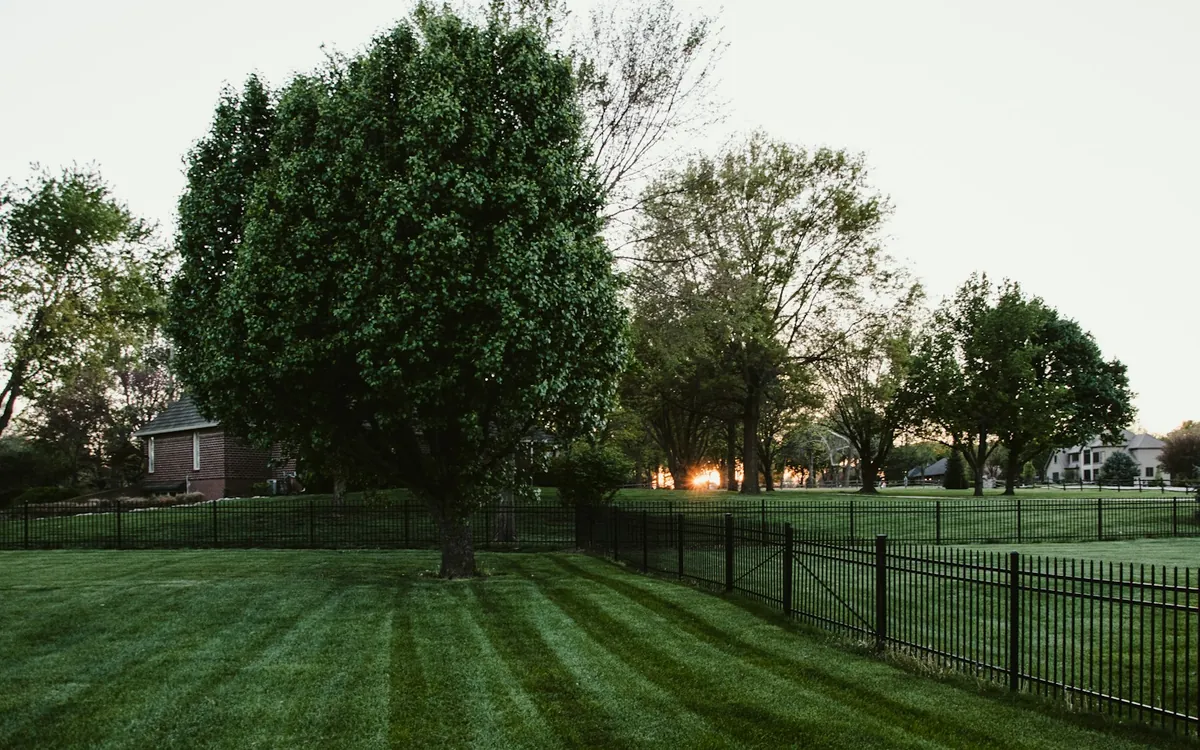
A lawn bordered by mature trees in evening light
A real garden setting. This photograph illustrates lawn care, not a particular state or grass species. Photo credits.
Make the plan fit your lawn.

Weather, soil and product formulations vary. Use local conditions and current product labels when deciding what to apply and when.

Buffalograss is a warm-season grass. Start with its growing cycle, then adapt the work to your Oklahoma yard.

Know the grass you are caring for

Buffalograss is a warm-season grass suited to some sunny, lower-input landscapes. Drought survival and staying green are different goals.

Check western Oklahoma conditions before expanding buffalograss

Oklahoma State’s March 2017 selection reference favors buffalograss for sunny, unirrigated western-Oklahoma lawns. Its low-input suitability is a regional site decision, not a promise for every shaded or heavily used yard. Oklahoma State Extension: Selecting a lawn grass for Oklahoma, March 2017.

For an existing lawn, sketch the grass you actually use, shaded edges and regular walking routes. Keep the summer appearance goal and available water alongside that sketch. Maintaining surviving turf is a different decision from expanding it into an unsuitable area.

Lower mature-lawn inputs do not remove establishment care

Record the planting date and material of a repaired patch separately. Arrange water and traffic protection before planting, and use current local establishment guidance for that cultivar. Do not transfer a mature lawn’s drought strategy to unrooted sod or emerging seedlings.

When seasonal growth slows, keep an observation boundary around localized damage. Compare it with nearby surviving turf under similar light. A uniform winter color change and a repeatedly bare gate route answer different questions.

Mowing and repair

Choose a height for the cultivar and intended lawn style. A natural-looking buffalograss area need not imitate closely cut sports turf. Establish seed, plugs or sod appropriate to the cultivar during the local warm growing season. New plants still need establishment care. See the bare-patch repair guide before preparing a seedbed.

Record weeds and delivery before increasing inputs

Oklahoma State’s April 2017 management overview places buffalograss primarily in central and western Oklahoma, with full sun and comparatively low irrigation requirements. The reference does not set a current permitted watering schedule. Oklahoma State Extension: Turfgrass management in Oklahoma, April 2017.

If a patch looks weak, identify competing plants and compare root-zone moisture before adding water or nutrients. For any soil amendment, request grass-specific laboratory advice and retain its units. A paler lawn than a neighbor’s bermuda is not a reason to copy that lawn’s feeding program.

When a patch looks wrong

Too much water or nitrogen can encourage weeds. Some common lawn herbicides can injure buffalograss; check species-specific label directions. Photograph the whole pattern and close leaf details before selecting a treatment. Brown patches have several possible causes. Confirm the weed, insect or disease and the grass before using a pesticide; follow the current label’s allowed uses, rate, timing and access instructions.

Track usable cover, not just darker color

Save cultivar identity and a boundary photo, note sun and wear, and record established versus recently planted areas. State the acceptable summer appearance before changing irrigation. If repair fails again, revisit fit and use before ordering another bag.

Separate a water goal from unexplained damage · Keep the monthly check-in sheet

Sources and local guidance

University guidance supports the species facts and care principles here. Rates and dates in a regional source apply to that region; they are not national prescriptions. Use your local extension office for cultivar, soil-test and treatment decisions.

KEEP IT BY THE GARDEN DOOR

Your year at a glance.

Keep a one-page copy of this guide’s monthly checkpoints.

COAST TO COAST GRASSJANUARY - DECEMBER / REUSABLE EACH YEAR

Buffalograss in Oklahoma

Check summer water goals and winter suitability together, especially before replacing existing turf.

Before you start: Weather overrides the month. Repair during active warmth; reduce work as growth slows. Prepare water equipment before your first local freeze, even if earlier than shown.

  1. January

    Check winter conditions

    Protect frosted or saturated turf. Check moisture during extended dry weather.

    Check: Cold-weather browning alone is not a call for nitrogen.

  2. February

    Prepare for growth

    Distinguish staying green from surviving drought.

    Check: A warm spell does not prove sustained green-up.

  3. March

    Watch green-up

    Compare growth across the lawn. Identify weeds before choosing a control method.

    Check: Delay disruptive work while the grass is still dormant.

  4. April

    Wait for steady growth

    Resume mowing as needed at a cultivar-suitable height. Inspect irrigation coverage.

    Check: Nitrogen and coring need suitable active growth, not a date.

  5. May

    Plan a warm repair

    If growth is vigorous, repair diagnosed bare areas with suitable grass material. Protect establishment.

    Check: Confirm the cultivar’s seed, sod or plug requirements.

  6. June

    Use the growing window

    Mow by growth. Core compacted areas only if needed and the lawn can recover.

    Check: Avoid saturated or drought-stressed soil.

  7. July

    Watch heat and water

    Check rainfall, root moisture and sprinkler coverage. Adjust care to the lawn’s actual response.

    Check: Excess water and nitrogen can favor weeds.

  8. August

    Leave recovery time

    Inspect wear and thinning. Plan remaining repairs only if enough warm growing time remains.

    Check: Do not begin major work as growth is shutting down.

  9. September

    Reassess the season

    Reduce mowing frequency if growth slows. Review winter annual weeds and upcoming local restrictions.

    Check: Avoid late nitrogen that forces growth before cold weather.

  10. October

    Protect the leaf cover

    Clear heavy leaves and monitor moisture. Keep traffic off frosted turf where frost occurs.

    Check: Brown color may be dormancy; diagnose patches separately.

  11. November

    Adjust to the site

    If growth has slowed, reduce inputs. Winterize irrigation where freezing is expected.

    Check: In frost-free areas, follow continued growth and rainfall.

  12. December

    Keep a useful record

    Record this year’s green-up, repairs and water use. Inspect dry or repeatedly wet areas.

    Check: Do not assume every warm-season lawn is dormant now.

Sunny, lower-input sites

Distinguish staying green from surviving drought.

Excess water and nitrogen can favor weeds.

Use current local advice and product labels for treatments. New seed, sod and plugs need establishment care. This is a planning guide, not a monthly application schedule.

Sources: Colorado State Extension: Buffalograss lawns · USDA: Land-grant university directory. Prepared September 24, 2026.

MATCH THE TOOL TO THE TASK

Find the dry spot.

As an Amazon Associate I earn from qualifying purchases. Product links open specific Amazon listings; links labeled “search” open results for a tool type. These are researched options, not hands-on-tested rankings. How we use affiliate links.

Measure coverage first; automate or replace equipment only where the check shows a need.

A timer and sprinkler are optional upgrades, not a substitute for a coverage check.

Watering / 4060-4

Melnor 4060-4 MiniMax Turbo oscillating sprinkler

Consider for: Adjusting spray to a rectangular patch.

The 4060-4 design provides adjustable width, range and flow. Separate adjustments help match the spray footprint to the lawn.

Check before buying

Actual coverage depends on pressure, hose losses and wind. Confirm the 4060-4 variant and connection supplied; test the footprint in your yard.

Manufacturer information

Watering / 62061 series

Orbit 62061 single-outlet hose timer

Consider for: One hose-fed watering area.

Battery-powered scheduling, manual override and a user-selected rain delay. Useful when the problem is remembering to stop or start one hose sprinkler.

Check before buying

One outlet; scheduled intervals are 6 hours, 12 hours or 1–7 days. Check whether that fits the job, along with faucet fit and 25–100 PSI pressure. Two AA batteries are not included. The timer cannot correct uneven coverage.

Manufacturer information

A different job? Find suitable tools
KEEP GROWING

A useful plan is one you can adapt. Return to your guide as the seasons change.

Find another lawn plan