Texas · St. Augustine

Texas St. Augustinegrass Care & Monthly Lawn Calendar

Start a Texas St. Augustinegrass plan with the cultivar and irrigation coverage. When a patch struggles, investigate the pattern before treating the whole lawn.

START HERE / THE PRACTICAL ANSWER

Three things to know.

Mowing
AggieTurf lists 2.5–3.5 inches. Confirm cultivar guidance instead of borrowing another lawn’s cut.
Water
A catch-can test checks both sprinkler output and uneven coverage.
Repair
Use matching sod or plugs; St. Augustinegrass spreads by above-ground stolons.
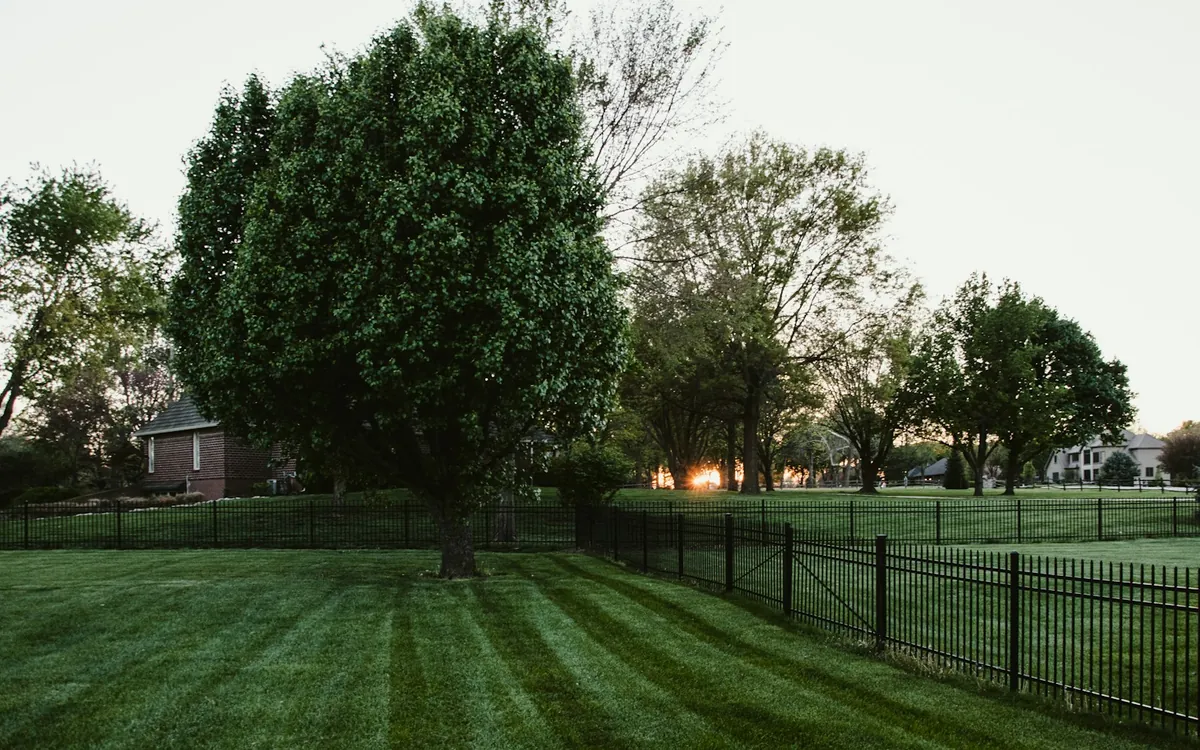
A lawn bordered by mature trees in evening light
A real garden setting. This photograph illustrates lawn care, not a particular state or grass species. Photo credits.

Know your grass and site

St. Augustinegrass is a warm-season grass established mainly with sod or plugs. Cultivars differ in shade tolerance, mowing needs and disease susceptibility.

Make the plan fit Texas

Texas yards differ in winter exposure, soil and water availability. Record your city or county, cultivar, sun exposure and local watering rules. Use those details when requesting a diagnosis or a nutrient recommendation.

Choose your next step

Check the cause before choosing the job
If you notice…Check firstNext step
A sunny edge turns brownCompare root moisture and sprinkler output there with a healthy patch.Do not assume all brown areas have the same cause or need the same product.
Water runs off heavy soilTime the onset of runoff during a short test.Try shorter cycles with time between them, then recheck infiltration.
An old repair is failing againRecord shade, traffic and rooting before replacing sod.Correct the repeating condition before paying for the same repair again.

Mowing: check the actual cut

A rotary mower can suit St. Augustinegrass when it reaches the correct height for the cultivar. Check the actual cut on level ground and keep the blade sharp. Avoid using another grass species’ low-cut appearance as the target.

Water: measure before adjusting

Texas A&M describes a catch-can audit as a way to measure precipitation rate and uniformity. Use equal containers around one zone, record the run time, and retain the low readings. Your average should not conceal a dry section.

Calculate lawn area or sprinkler runtime · Collect a useful soil sample

Avoid an unnecessary treatment

Core aeration or thatch work can damage a lawn temporarily. Diagnose the need first and choose an active growing period with enough recovery time. Vigorous cultivation is not a harmless cure for every weak patch.

Use the patch diagnosis checklist before choosing a treatment.

ONLY IF IT HELPS WITH THE JOB

A small, useful toolkit.

Start with what you own. These links open Amazon searches, not a tested-product ranking. As an Amazon Associate, we earn from qualifying purchases. Affiliate disclosure.

Compare the dry and healthy areas

Reuse matching cans or choose graduated catch cups.

Search Amazon: Irrigation catch cups

Track rainfall at the lawn

A local reading helps explain why a schedule needs changing.

Search Amazon: Rain gauge

Keep traffic off rooting sod

Select a visible temporary barrier that leaves safe access around the repair.

Search Amazon: Temporary garden barrier

Compare tools for a different task

Common questions

Should I buy a sprinkler timer to fix a brown patch?

Only if scheduling is the problem. A timer cannot fix a blocked head, poor coverage, compacted ground or a disease.

Why does Texas guidance differ from a Florida height recommendation?

Cultivars and regional guidance differ. Use the recommendation that fits your named grass and local conditions; do not combine the lowest number from several calendars.

Sources and regional limits

These references support the care principles and regional examples above. Use your local Extension office for cultivar, soil and treatment advice. Product labels and local restrictions take priority over a calendar reminder.

How this guide was prepared. No on-site inspection or product performance test is implied.

KEEP IT BY THE GARDEN DOOR

Your year at a glance.

Keep a one-page copy of this guide’s monthly checkpoints.

COAST TO COAST GRASSJANUARY - DECEMBER / REUSABLE EACH YEAR

St. Augustine in Texas

Record your location, shade and water limits. A plan for one part of Texas is not a statewide prescription.

Before you start: Weather overrides the month. Repair during active warmth; reduce work as growth slows. Prepare water equipment before your first local freeze, even if earlier than shown.

  1. January

    Check winter conditions

    Protect frosted or saturated turf. Check moisture during extended dry weather.

    Check: Cold-weather browning alone is not a call for nitrogen.

  2. February

    Prepare for growth

    Repairs usually use sod or plugs, not generic lawn seed.

    Check: A warm spell does not prove sustained green-up.

  3. March

    Audit before the season

    Inspect sprinkler heads and compare coverage before setting a summer schedule.

    Check: Check local watering restrictions.

  4. April

    Wait for steady growth

    Resume mowing as needed at a cultivar-suitable height. Inspect irrigation coverage.

    Check: Nitrogen and coring need suitable active growth, not a date.

  5. May

    Plan a warm repair

    Repair only in suitable growing conditions, using sod or plugs that match the cultivar; protect new rooting.

    Check: Confirm the cultivar’s seed, sod or plug requirements.

  6. June

    Watch runoff

    Time any runoff during a short irrigation test.

    Check: Split cycles where soil cannot absorb a long run.

  7. July

    Watch heat and water

    Check rainfall, root moisture and sprinkler coverage. Adjust care to the lawn’s actual response.

    Check: Standard and dwarf cultivars have different cutting heights.

  8. August

    Leave recovery time

    Inspect wear and thinning. Plan remaining repairs only if enough warm growing time remains.

    Check: Do not begin major work as growth is shutting down.

  9. September

    Reassess the season

    Reduce mowing frequency if growth slows. Review winter annual weeds and upcoming local restrictions.

    Check: Avoid late nitrogen that forces growth before cold weather.

  10. October

    Follow slowing growth

    Reassess irrigation as growth and weather change.

    Check: Do not keep summer settings automatically.

  11. November

    Adjust to the site

    If growth has slowed, reduce inputs. Winterize irrigation where freezing is expected.

    Check: In frost-free areas, follow continued growth and rainfall.

  12. December

    Keep a useful record

    Record this year’s green-up, repairs and water use. Inspect dry or repeatedly wet areas.

    Check: Do not assume every warm-season lawn is dormant now.

Identify the cultivar

Repairs usually use sod or plugs, not generic lawn seed.

Standard and dwarf cultivars have different cutting heights.

Use current local advice and product labels for treatments. New seed, sod and plugs need establishment care. This is a planning guide, not a monthly application schedule.

Sources: Texas A&M AgriLife: St. Augustinegrass · Texas A&M AgriLife: St. Augustinegrass Lawn Management. Prepared September 24, 2026.

KEEP GROWING

A useful plan is one you can adapt. Return to your guide as the seasons change.

Find another lawn plan